

AUGUSTA, Ga. -- With all the talk of lengthening the par-5 13th hole at Augusta National, it makes sense to give you the opportunity to see it as it plays in the yardage book this year.
At first glance of the hole map itself, nothing appears to be very severe. Unlike most yardage books on tour, this one does not give you slope. The tee is elevated, so even though the first run-out number is 289, it plays much shorter with no wind. If you throw downwind into the equation and really firm conditions, you'll see many players hitting a 3-wood. It's also because for most right-handed pros it's easier to draw a 3-wood than a driver.
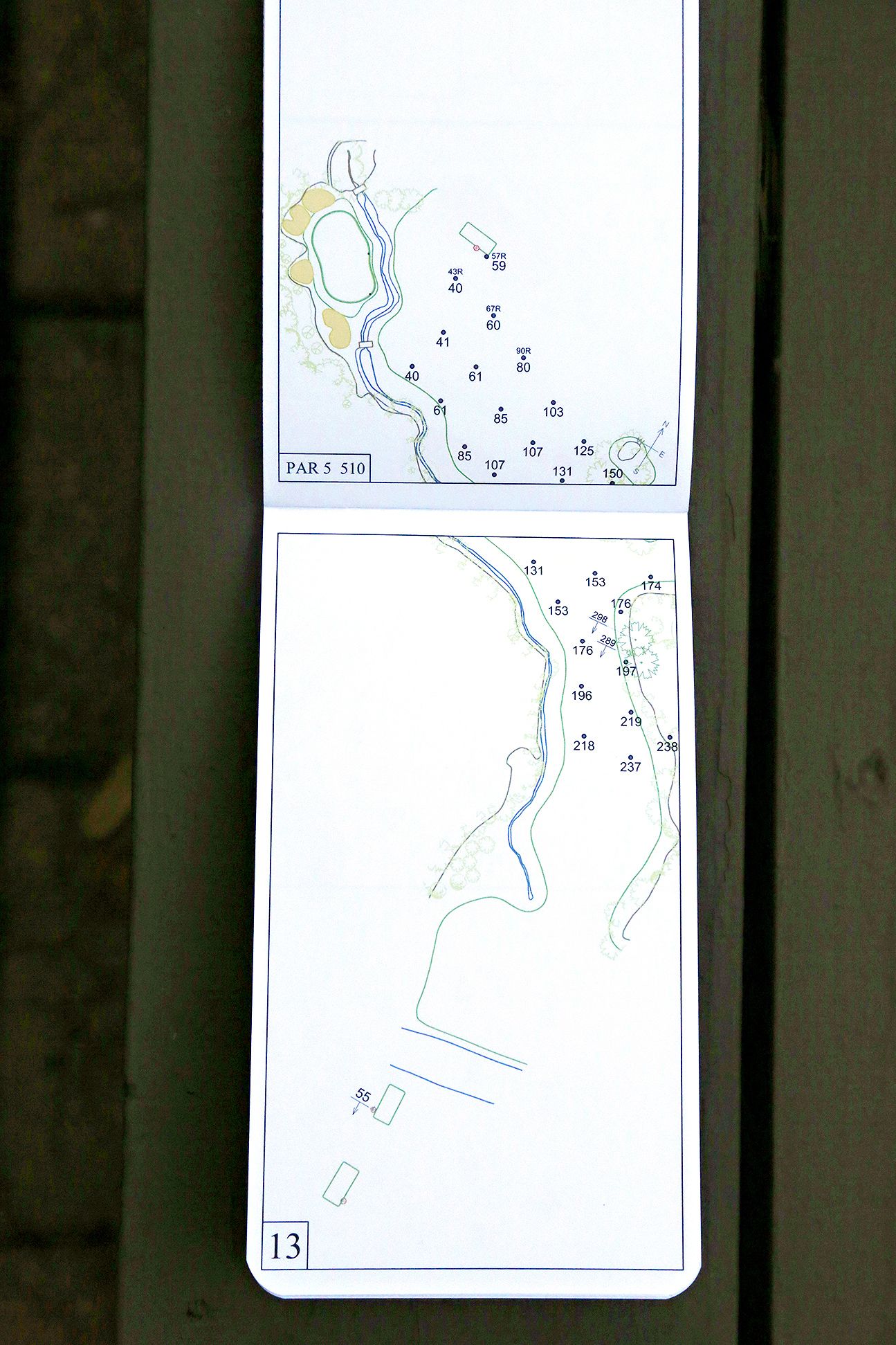
Take a look at the landing area. It gives you a sense of how far you have to carry the trees and Rae's Creek to hit a short iron in for your second shot. What it doesn't show is the severity of the right-to-left slope in the fairway. One big reason first-timers don't win the Masters is because they don't have extensive notes in their yardage books. For many players, just hitting a good tee shot here isn't enough to go for the green in two. Your lie in the fairway and hole location will determine what the smartest play is that day. That's easier said than done. Believe me when I tell you as a former caddie that trying to convince a pro to lay up from 210 yards in the fairway is no easy task, and all but impossible in a major.
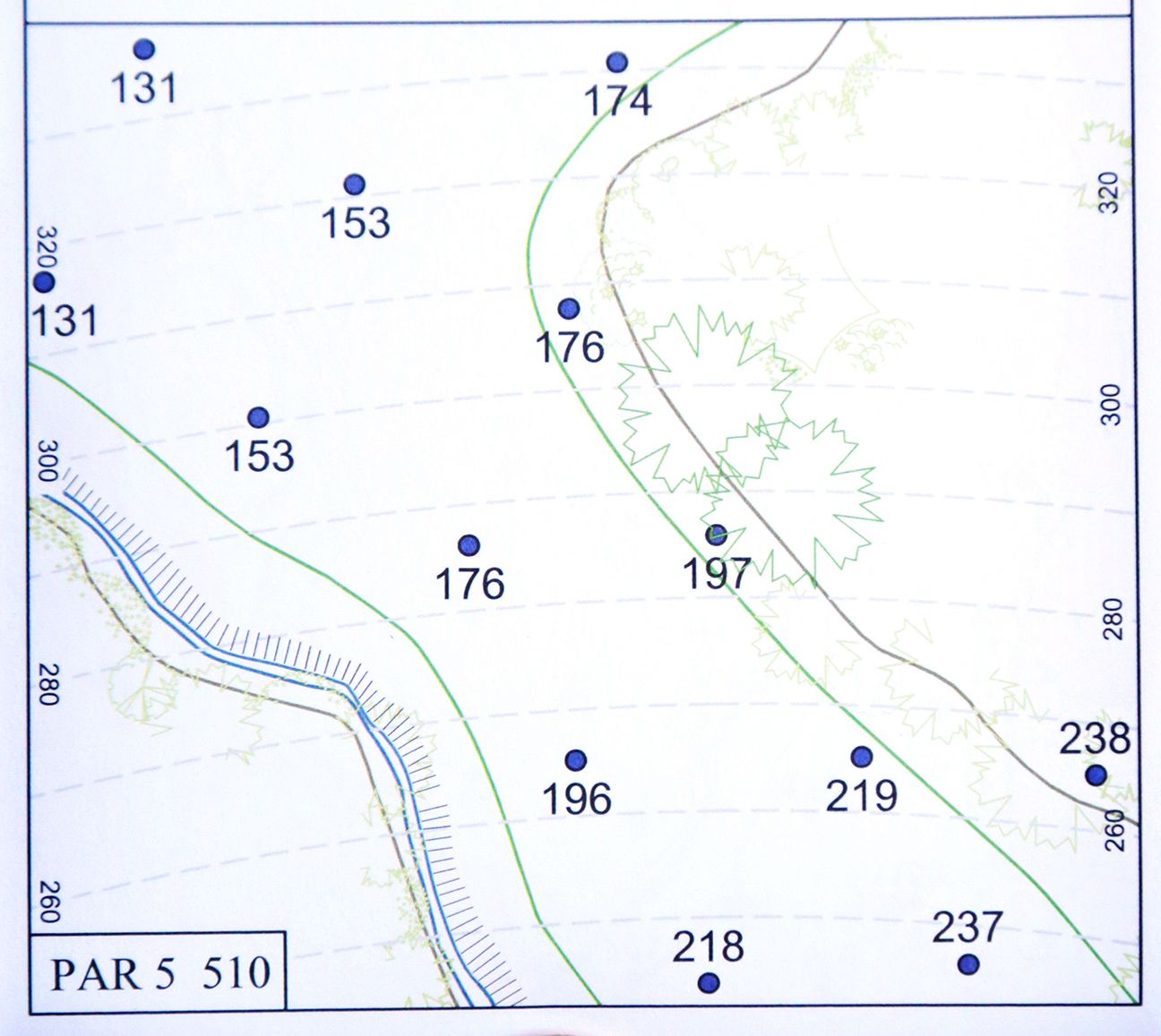
Notice anything strange about the sprinkler head numbers? Every other tour event we go to, the sprinkler heads are marked to the middle of the greens, usually shown in parentheses with the front number in bold. Here at Augusta National the sprinkler head yardages are all to the front of the greens!
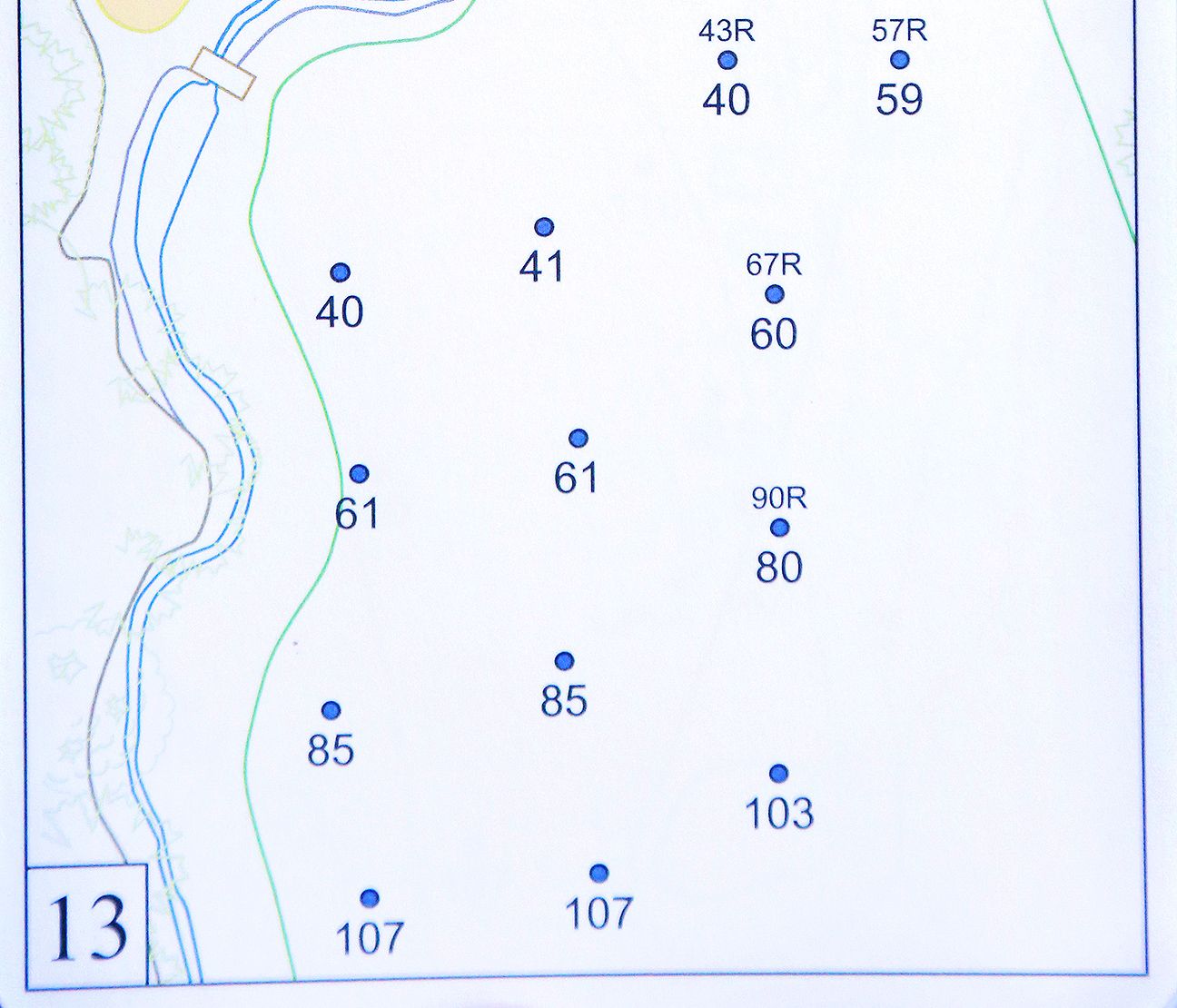
You will notice there are a few sprinkler heads on the right side of the fairway in the layup area that have an "R" next to the number. Look on the green for the red dots. The number with the "R" is the carry to that part of the green. And on this hole being short means a watery grave.

Lastly, examine the green complex. There are no arrows in a new yardage book, but we all know this green slopes from back to front. The tricky part is not going over the green and ending up in the bunker. Call that "The Dead Zone." If you're extremely lucky, you could end up between the green and the bunker, but it's not a shot even a tour pro would want if they are short-sided. Staying below the hole here can be scary, so what's the best way to ensure success? Hit the green in two and two-putt for birdie!
Yardage books courtesy of Augusta National Golf Club. Photos by Gerry Melendez for ESPN